- BaseRate
- Posts
- Ben Clement's word-for-word scripts for pricing pushback (+ his decision-making flowchart) 📊
Ben Clement's word-for-word scripts for pricing pushback (+ his decision-making flowchart) 📊
Also, how he puts BaseRate to work with his own clients

BaseRate Girlbot
October 30, 2025
This week we interviewed Ben Clement, who runs a magazine, leads a running crew, and has spent 15 years building a sustainable commercial photography practice.
Tell us about yourself, what you do in addition to shooting? How long you've been working commercially as a photographer?
Hi, I'm Ben Clement, I'm based in Naarm/Melbourne (AUS). I run a magazine and studio called Good Sport (we print annually, and do both playful and serious projects on the peripheral of sport).
I also run a fair bit, and have a running crew called AM:PM.RC which has been about for 11 years or so. It's a special group of people. I've been making commercial work coming up 15 years now. But I would say at least the first 5-7 were questionable in terms of that being a sustainable business.

Ben. Commercial photographer, runner.
What's your background? How did you end up shooting commercial work?
BC: I grew up in a small village in a place in Aotearoa (New Zealand) called Tūranganui-a-Kiwa in the early 90s. From an early age my life consisted of being an imaginative shy kid playing outside, and also yearning for the wider world - loving American movies, basketball, video games, etc.
My mum (who is a brilliant photographer by hobby) lent me a camera at the age of around 14 to take to a punk show. I was surprised at the results and I soon put down my pencils and paint brushes and dove into photography.

Ben Clement
For many years, I never knew a commercial path was ever possible, let alone what it even was. I was happy photographing punk and hardcore shows and my mates skateboarding.
As my passion grew and the world around me got bigger, I absorbed info from those around me. Soon enough I was moving countries to Australia and was dead set on becoming a globally known music photographer. Tumblr and Flickr were my classrooms, and then Instagram was born.

Ben Clement
For a number of years, I scraped by working for various magazines photographing musicians and artists. It became too much, as in, I made no money. And my interests were changing. I always had exhibitions, made books and was embedded in the local photography and art scene, which naturally puts you next to some brilliantly minded and fascinating people. Naturally I started getting asked to shoot different jobs, profiles, smaller sneaker campaigns etc.
I remember in around 2014, I made a very conscious choice to make a real shift in my work, both in style, themes, subject matter and the business side of things. The world of sport became this door I stepped into. I felt there was so much missing in how I saw it and what my relationship to it was. From there until now, that has been a large part of my commercial and personal work.
Is there a project you’ve worked on recently that you felt really excited about?
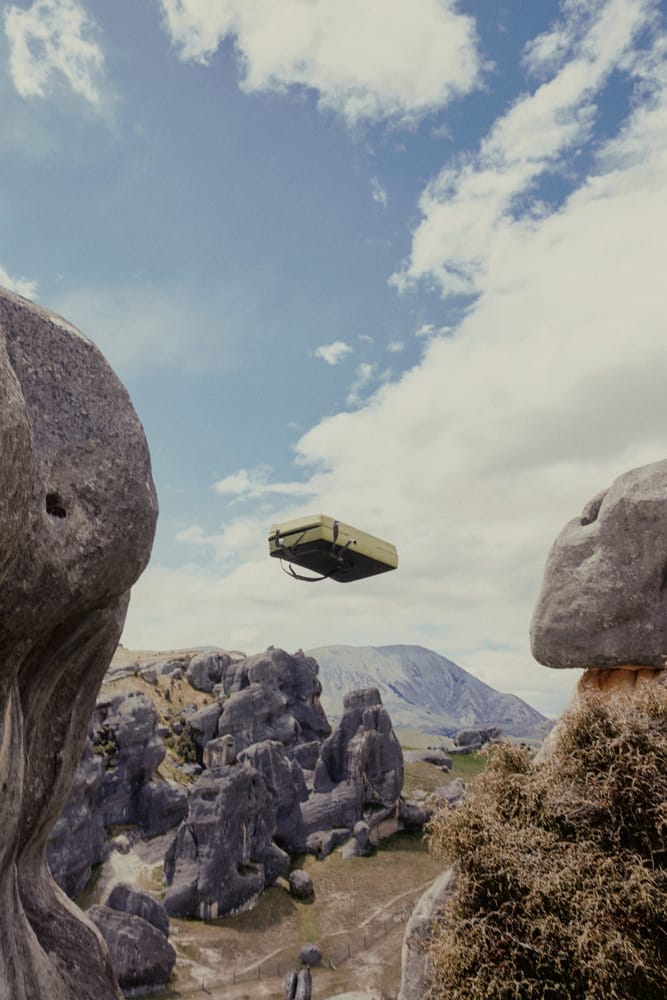
BC: I made a film and 200-page hardcover book for the outdoors brand Arc'teryx called Visions. It was a project I put forward to them and put a small but talented team together to bring it to life.

Visions, Ben Clement
This project touched on every aspect of what I love to do. It had a commercial output, and we all got paid properly. But I got to make an expressive short film, and a full scope photobook. The kind of project I would dream about earlier in my career.
Visions, Ben Clement
What does a typical client relationship look like for you? From first contact to final delivery.
BC: I'm very hands on, because I know production well enough and I believe in a holistic approach to a job. That means having everyone involved working across the job with the same knowledge and care.
I like to be involved in everything from casting to locations to the various meetings and into post production as well. This is the ideal, but sometimes it doesn't always go this way.

Ben Clement
At this stage, working for myself, I have some good systems and processes in place in how I like to build out a job. I've always said, as a photographer or director, the main thing I do is communicate.
The most obvious is through the work, but on a commercial level, the importance of having clear and healthy style of communication is vital, from emails to calls, to how I put a presentation together.

Ben Clement
The Business Side
When was a time you felt most challenged by a client around pricing? How did that play out?
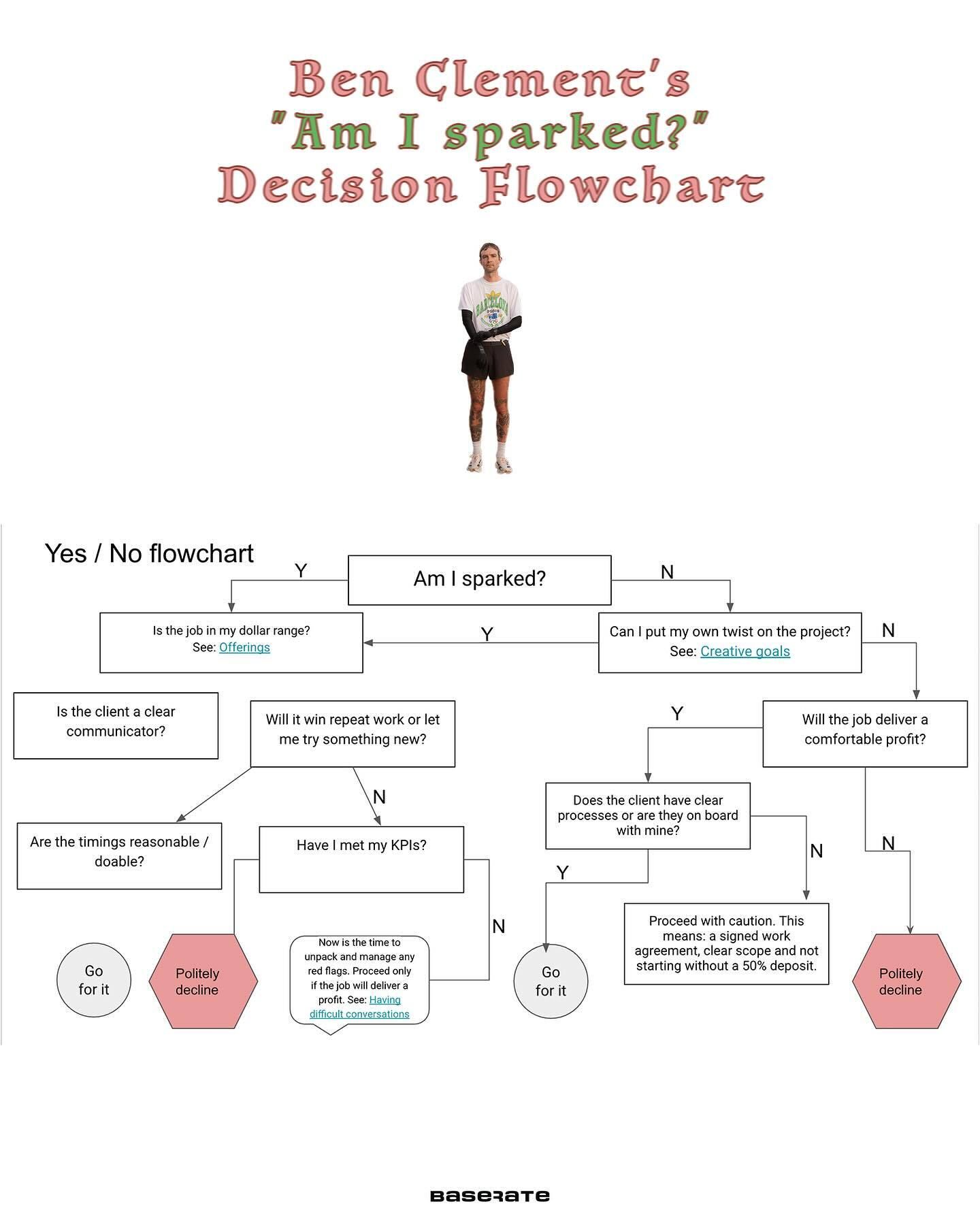
BC: My gosh, all the time. But I go back to clear communication. I have a flow chart on how I take on a job. I'm really clear on how I value my work, and often believe saying no is more respectful than saying yes just for the sake of it.
How did you learn to advocate for yourself financially? Was there a turning point?
I think I got really fed up with not being taken seriously. I would say for me, this was around 6-7 years ago. I remembered taking a pause and really considering the business side of things. I asked myself, if I know I take the artistic and creative side of things seriously, then I should equally take the business seriously as well.
I went on a journey to learn how to advocate for myself, and how to communicate. I spent time with this women named Jo Hook, who is an NLP (Neuro-Linguistic Programmer) kind of like a life coach. She helped me figure out a lot of creative and business challenges and learn a lot about communication.

Ben Clement
What's your process for explaining commercial photography costs to clients? Especially clients who might not understand the industry.
I like to use analogies a lot. If say a new skincare brand came to me and I was in the scenario of having to explain things. I generally make a comparison. They put all this time, care, money and energy into perfecting a product. Getting it right, so their customers are satisfied and want to return to their product.
I say, just like [them], I put in the same care, time, money and energy into what I do. So the value needs to be met with the same considerations.
Ben Clement
Have you had to turn down work because of budget?
BC: Always. I like to problem solve and try come to the table as much as I can. Generally if it's a smaller budget, the deliverables will have to be reduced. But I have a certain standard in how I work, which involves a specific team, amount of equipment, and time. And if that budget doesn't allow that, it would have to be an absolute ripper of a brief for me to try take it on.

Sometimes I lay it out like this:
Challenge: We love your work, but photographer x can do the job for $4k.
Response: It sounds like you're making your decision based on price. With that in mind, it might be useful to share some of the thinking behind my rates. I always charge industry standard based on my experience, operating expenses and paying my team fairly. I'm a firm believer in getting the foundation right to make the best work.
Challenge: Price-focused client.
Response: It sounds like you're making your decision based on price. With this in mind, I'd suggest we chat about the budget first. There's a number of ways we can be clever about how we set things up.

Ben Clement
Tools & Process
How do you typically put together estimates? What's your workflow like?
BC: Well, now I’ve moved to BaseRate (game changer!)
Previously I worked with my agent and had a discussion about each job and put together what I needed, then allowed them to build out the rest in detail.
Often I’m working with a producer and feeding them information so they can build out the estimate.

Ben Clement
What made you decide to try BaseRate?
BC: I like to be involved in the production process.
I also produce jobs through Good Sport Studio.
It's a skill that helps me prepare for all types of jobs and I can speak to clients about more than just the creative.
But the biggest thing that got me was Usage Calculator.
For so long this has been the murkiest part of being a commercial photographer. I've had already a higher success rate with it just by providing clear calculations to clients.

Ben Clement
How have BaseRate tools changed how you approach pricing? Any specific examples of jobs where it made a difference?
BC: Using the Production Budget Builder, for me, allows me to not miss anything.
Previously when I would build a budget from scratch, it was be easy to forget something seemingly simple, like budgeting for hard drives. But all of a sudden you're $1,000 over budget, so having clear information on what to include makes a big difference.
We recently produced a job for a global outdoor brand and I was helping my business partner learn some new things about production.
Having everything clearly labeled and laid out made it so easy for him to make sense of how all of the pieces fit together.

Ben Clement
Looking Forward
Where do you see commercial photography heading? What are you optimistic about? What concerns you?
BC: I've been working commercially for more than 15 years now. I have had a wonderful but turbulent career. My ideas are getting more ambitious and more defined, so I'm always optimistic about having a drive and interest in making work.
I feel though, I will start leaning this more towards personal work. The commercial world is very flat and homogenous, and I don't see that changing or improving. I think where it's heading, at least for the photographer, is to become more niche. The more niche you can be, the more attractive you are to a client.

Ben Clement
What's one piece of business advice you'd give to a photographer just starting out in commercial work?
BC: Ask questions, ask more questions, and keep asking questions.
Ask questions of your client or your team or your peers. Also I'm a believer that a lot of the shoot happens in prep. Try and prepare as much as you can. And learn to communicate (ask questions) and learn to articulate your ideas and your needs. And be thankful. Saying thanks goes a long way.

Ben Clement
Thanks for reading as always and thanks for trying BaseRate. These products are a labor of love that we hope help fill knowledge gaps in our industry as well as prevent a race to the bottom when it comes to industry standard rates. We appreciate you joining us in that mission!
Questions? Feedback? Reply to this email and we’ll get back to you as soon as we can.
Built for you by someone who's been there. A lot. : )
Cait
Founder, BaseRate.xyz
@baserate.xyz
p.s. In case you missed it, check out our last interview with commercial photographer, Clara Nebeling.